FULL CIRCLE
MODEL

Traditional therapy happens in isolation once a week. Encircle is shifting the paradigm by providing a 'social workbench' where life-saving coping skills are put into practice in real-time, right inside our home-like environments.
%20-%20Copy.webp?width=150&height=150&name=THERAPY++Holy+Headshot%20(1)%20-%20Copy.webp)
Getting Started
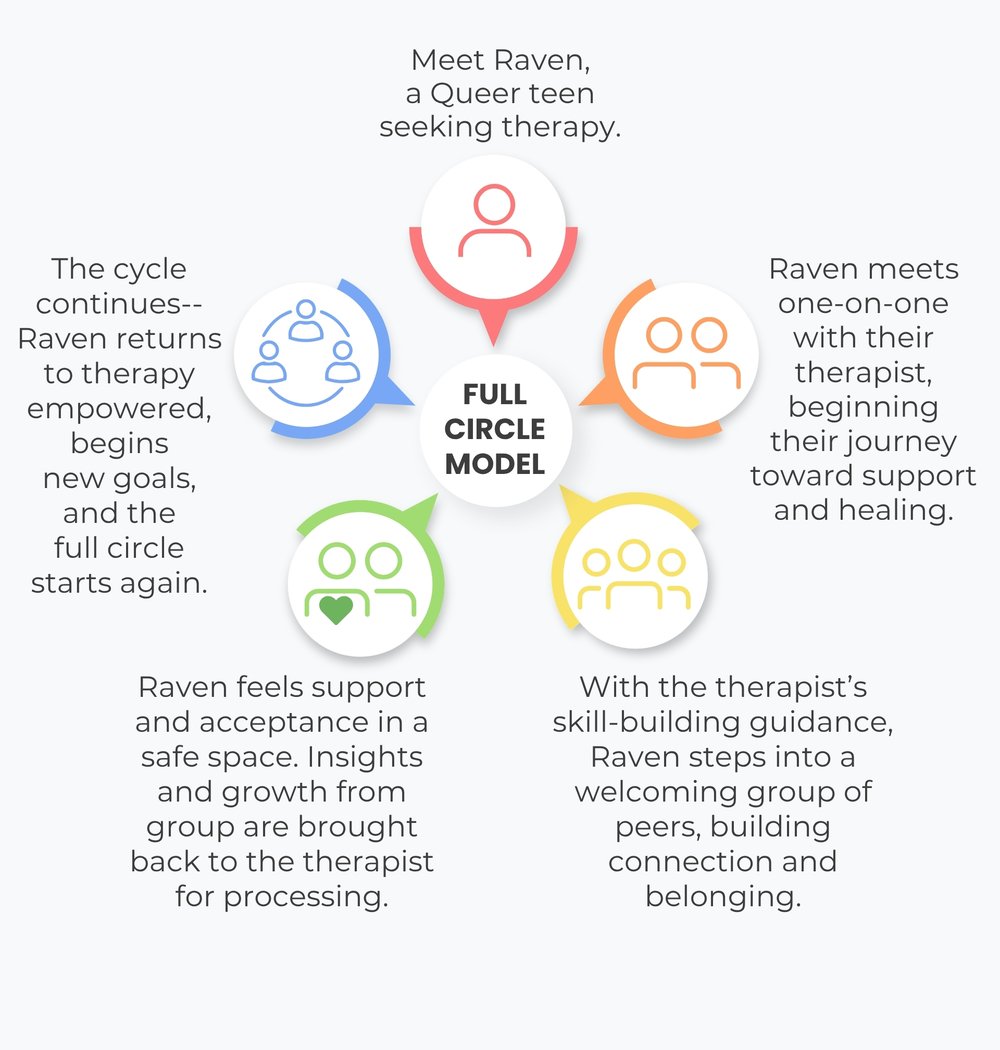
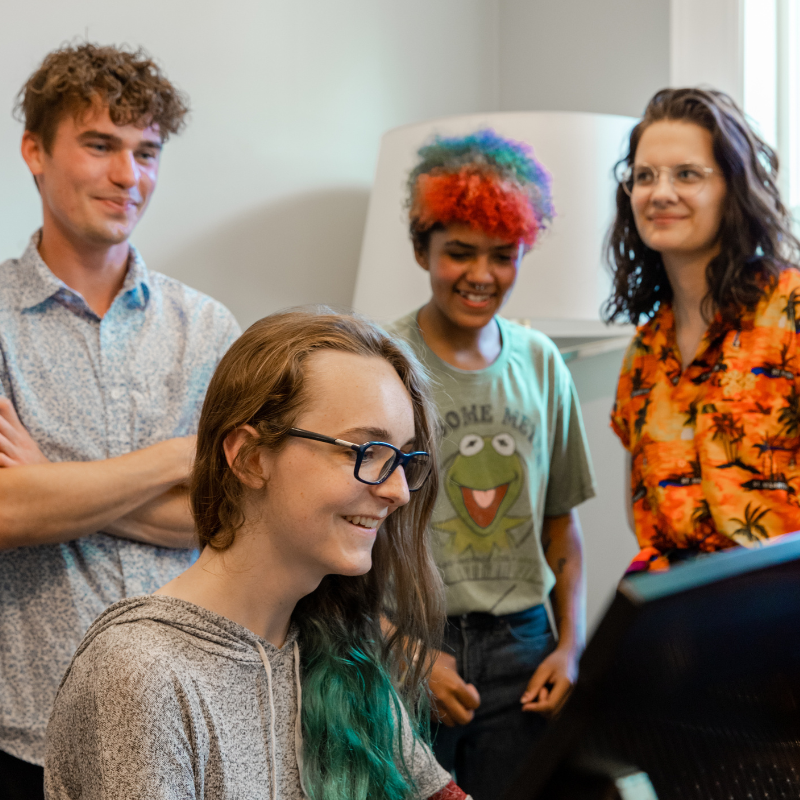
- Youth connect with the Full Circle Model through their Encircle therapist, or through other trusted sources, including medical doctors, school counselors, and faith leaders.
- Participants are paired with a licensed Encircle counselor to begin therapy. After a few regular sessions, the Full Circle Model journey begins.

Setting Goals
-
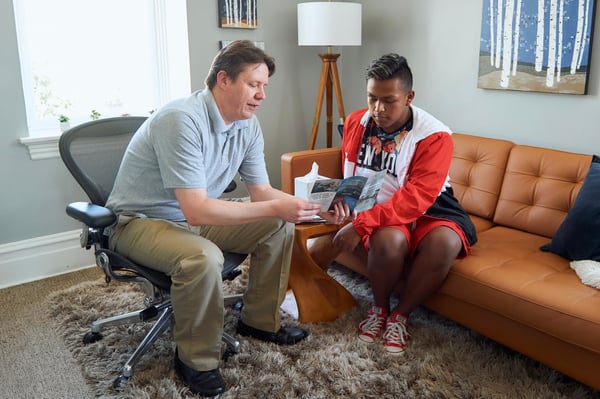
In the safety of the therapy room, the therapist and youth collaboratively set goals and select specific coping skills from The Encircle Toolkit.
- Together, they map out a customized "Social Assignment" tailored to the youth's specific therapy goals and comfort level. Goals are rooted in Play Therapy and Recreational Education.
The Coordinated Step-Out
-
The therapist provides the Encircle programs team with a few details so they can help support the youth as they learn to access their own toolkit items.
-
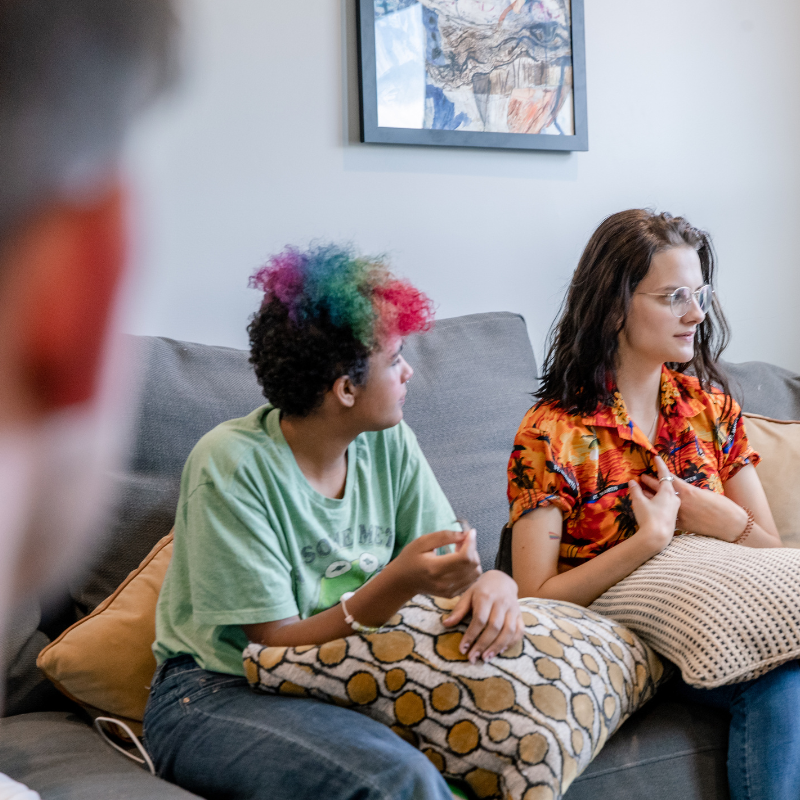
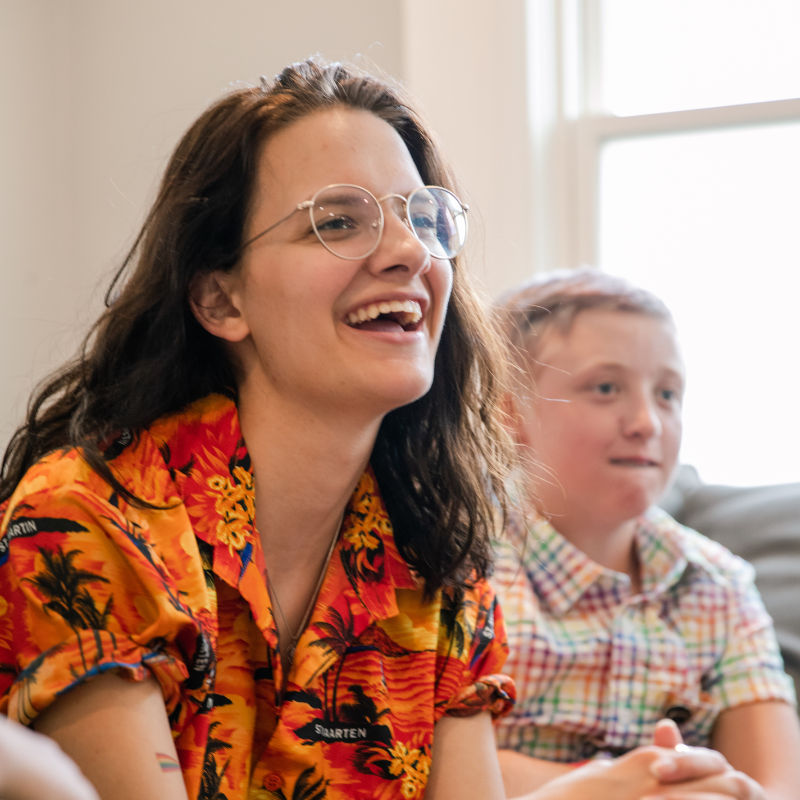
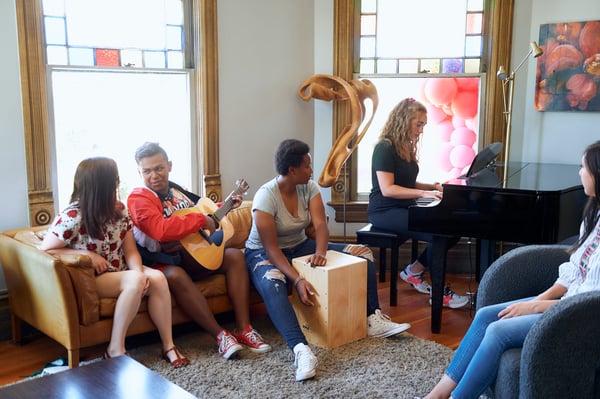
The youth practices their new coping skills in a supervised, inclusive and supportive space with LGBTQ+ peers. Encircle programs are designed around youth-specific interests: creative activities, free food and friends.
Real-World Social Workbench
-
The youth enters Encircle's programs to practice their coping strategies in an accepting peer community.
- Lived experiences and environmental triggers are brought back to individual therapy sessions voluntarily, closing the clinical feedback loop.

Moving Into Leadership
-
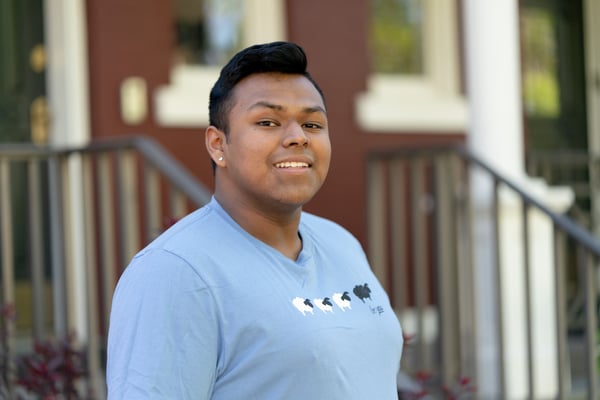
When the client masters their own situational regulation, they experience a huge shift from vulnerability to self-confidence, moving from care recipient to community builder and role model.
-
Encircle Therapy doesn't automatically stop upon completion of the Full Circle Model, unless the client and therapist feel that ending therapy is best. Youth can always continue or re-enter both standard therapy and the Full Circle Model at any time.
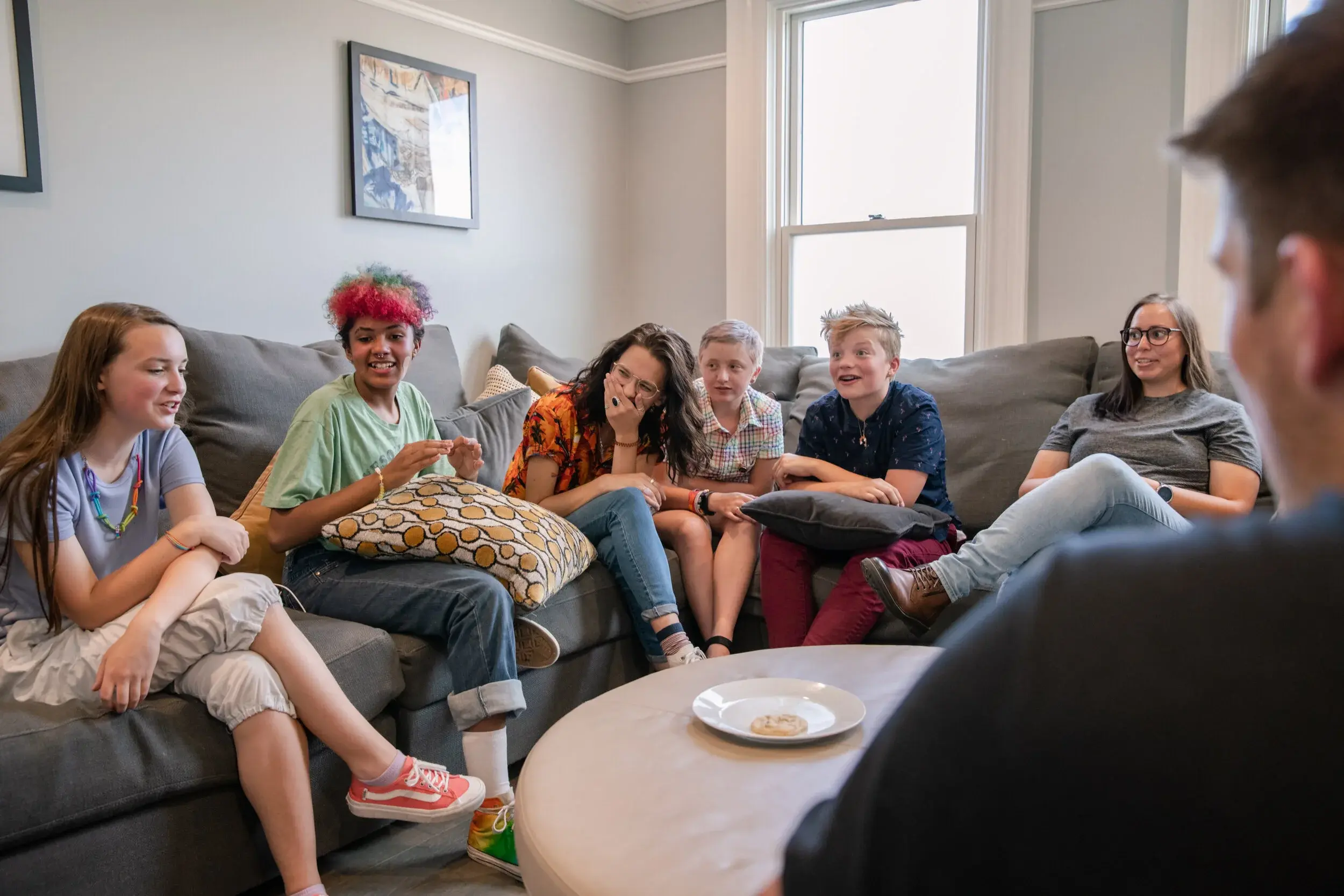
Deep, Authentic Connections
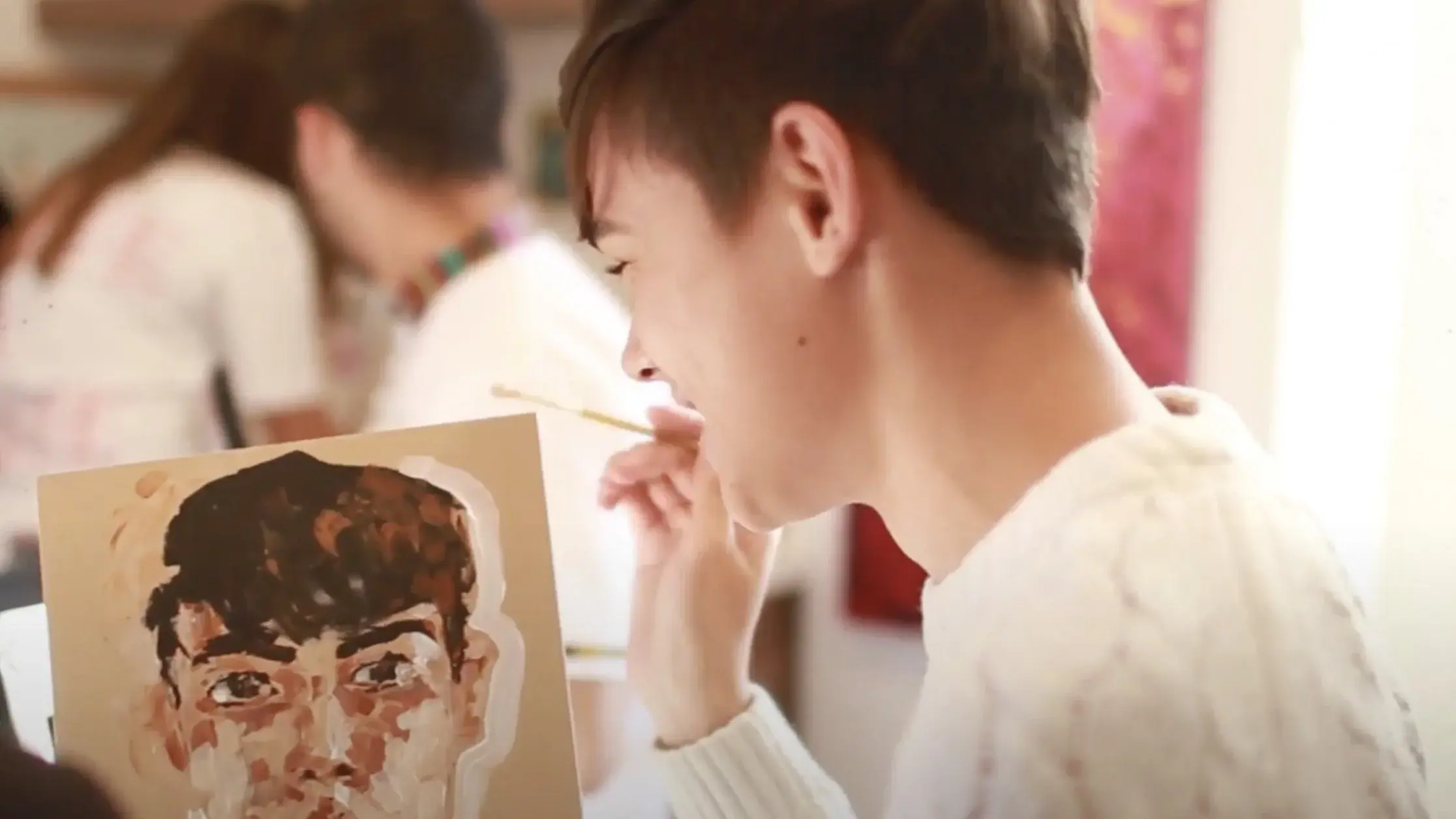
Real-World Independence
Translating distress tolerance wins from Encircle out into the community—managing workplace stress, navigating job interviews, and building confidence
.webp)
Future-Oriented Actualization

The Lifelong Trajectory

Biobehavioral Co-Regulation & Attachment
Anchored in the pioneering adolescent developmental research of Dr. Lisa Diamond (University of Utah)

Family Systems & Ecosystemic Health
Grounded in multi-decade empirical data from Dr. Caitlin Ryan’s Family Acceptance Project (FAP)

Interpersonal Suicide Theory
Structurally engineered to target and eliminate thwarted belongingness and perceived burdensomeness as defined by Dr. Thomas Joiner

Relational Communication Framework
Utilizes Dr. Dan Hughes’s PACE model (Playfulness, Acceptance, Curiosity, Empathy) to guide frontline floor interactions
Cognitive Resiliency &
Locus of Control
Integrates Julian Rotter's foundational psychological framework to actively move youth away from environmental avoidance and build an authentic, self-directed internal locus of control

Identity-Affirming Care & Neurodiversity-Affirming Logic
Rejects compliance-based behavioral modification in favor of intersectional, identity-affirming social frameworks that reduce harmful social masking fatigue and combat autistic burnout
